How to Win the War on Fungus Gnats: A Complete Guide
Dealing with fungus gnats can feel like a never-ending battle, especially when you’ve curated a home full of greenery. These tiny, mosquito-like pests are more than just a nuisance; while the adults are annoying to have flying around your coffee, the larvae are the ones living in the soil, potentially nibbling on your plants’ delicate root systems.
Here is everything you need to know about identifying, treating, and preventing these unwanted visitors.
What Causes Fungus Gnats?
The primary culprit is moisture. Fungus gnats thrive in soggy, organic-rich environments.
- Overwatering: If the top inch of your soil never dries out, it becomes a literal breeding ground.
- Decaying Matter: They feed on fungi and decaying organic material in the potting mix.
- New Additions: Often, gnats are “hitchhikers” brought home in bags of potting soil or a new plant from a store.
How to Treat an Active Infestation
Because the gnat life cycle includes eggs, larvae, pupae, and adults, you have to hit them from multiple angles to truly clear them out.
1. High-Efficiency Traps (For Adults)
Adult gnats are weak fliers and are easily lured by specific colors and light frequencies.
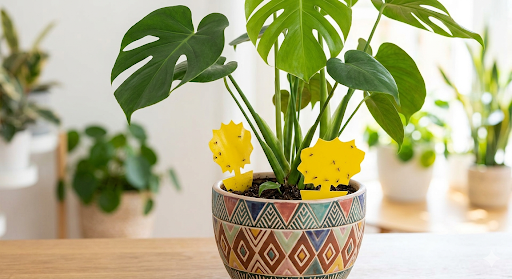
- Yellow Sticky Stakes: These are the classic butterfly-shaped traps you stick directly into the soil. They catch the adults before they can lay more eggs.
- Electronic Indoor Zappers: For a more powerful solution, a 20W electronic insect killer (like the Aspectek) is a powerhouse. Unlike smaller decorative traps, these use high-voltage grids to instantly eliminate gnats, mosquitoes, and fruit flies. Placing one near your most “popular” plant creates a no-fly zone for pests.
2. The Hydrogen Peroxide Flush (For Larvae)
To kill the larvae living in the soil, mix one part 3% hydrogen peroxide with four parts water. Water your plants with this solution. It fizzes on contact with the larvae (killing them) and then breaks down into oxygen and water, which is healthy for the roots.
3. Mosquito Bits
These contain a naturally occurring bacterium (BTI) that specifically targets gnat and mosquito larvae without harming pets or people. You can sprinkle them on the soil or “steep” them in your watering can like tea before watering your plants.
Prevention: Keeping Them Away for Good
Once you’ve cleared the swarm, you’ll want to make sure your home stays a pest-free zone.
- The “Top Inch” Rule: Always let the top 1–2 inches of soil dry out completely before watering again.
- Bottom Watering: Place your plants in a tray of water for 20 minutes so they soak up moisture from the bottom. This keeps the top layer of soil dry, making it impossible for gnats to lay eggs.
- Gravel or Sand Mulch: Adding a half-inch layer of aquarium gravel or decorative sand on top of your soil creates a physical barrier. Larvae can’t crawl out, and adults can’t reach the soil to lay eggs. Plus, it looks much cleaner than bare dirt.
- Quarantine: Keep any new plant additions in a separate room for two weeks to ensure they aren’t bringing in a “gift” of gnats or spider mites.
Expert Tip
If you notice gnats mostly in one specific room, check for hidden moisture sources beyond just your plants—leaky faucets or even a damp bag of potting soil in a closet can keep a population thriving even if your houseplants are perfectly dry.